
You open your phone, scroll through dozens of fitness apps, and honestly — you have no idea which one is actually worth your time and money. Sound familiar?
The good news? AI has completely changed the game. In 2026, the best fitness apps do not just log your workouts — they learn from you, adapt to you, and coach you like a personal trainer in your pocket. Whether you want to lose weight, build muscle, sleep better, or just move more, there is an AI-powered app built exactly for that.
I have spent weeks testing, comparing, and breaking down the top options so you do not have to. Let’s get into it.
What Are AI Fitness & Health Tracking Apps?
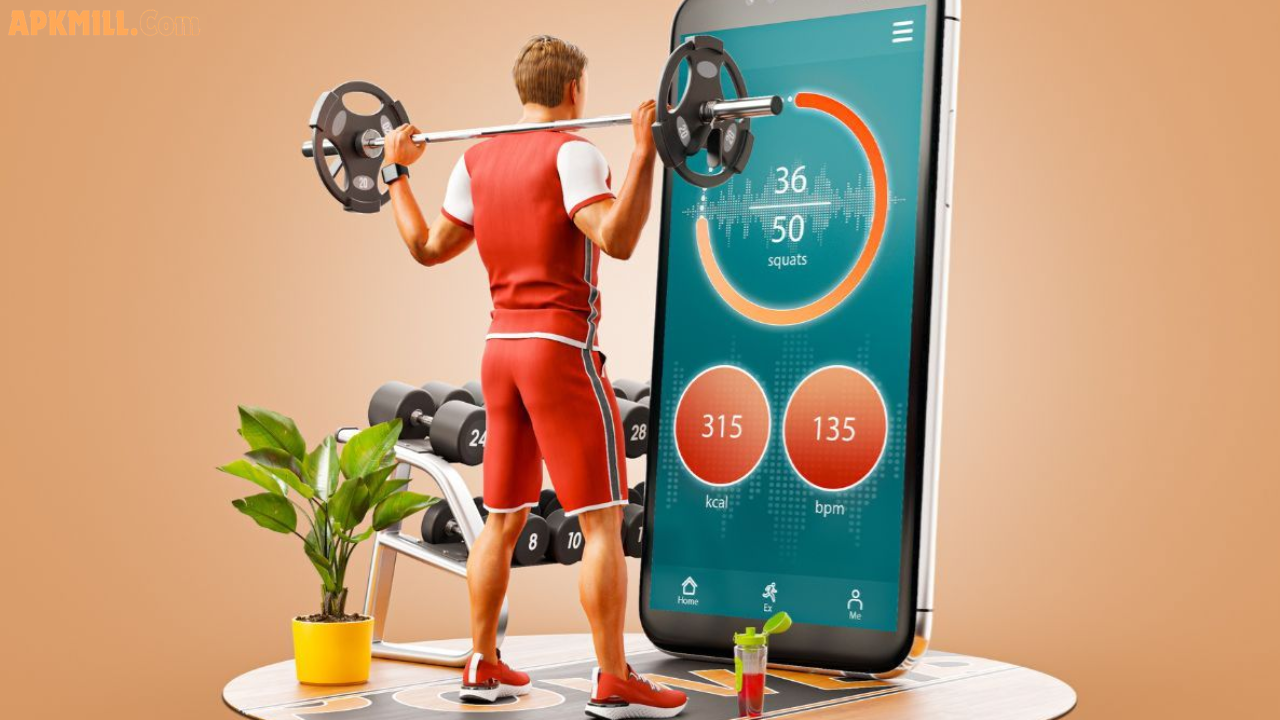
AI fitness and health tracking apps are mobile applications that use machine learning and artificial intelligence to personalize your workouts, nutrition plans, sleep tracking, and overall wellness — based on your unique data.
Unlike older apps that gave you a fixed 8-week program and called it a day, today’s AI-powered apps are dynamic. They study your performance history, recovery patterns, available equipment, and even your daily schedule — then adjust your plan in real time.
Think of it this way: a traditional app is like a printed cookbook. An AI fitness app is like having a chef who knows your taste, your pantry, and your health goals — and cooks something new for you every single day.
Key things AI fitness apps do differently:
- Adapt your workouts based on how you performed last session
- Predict when you need a rest day before you burn out
- Suggest meals based on your macros and activity level
- Integrate with wearables like Apple Watch, Fitbit, or Garmin
- Provide real-time feedback on form using your phone’s camera
Why 2026 Is a Turning Point for AI Health Apps
This is not just hype. The numbers back it up.
Nearly 345 million people were using fitness apps regularly by 2024, and analysts predict the AI fitness market will surpass $150 billion by 2029. In 2026, the jump in quality has been significant. Apps that felt “smart” in 2023 now feel clunky compared to what’s available today.
What changed? A few major shifts:
1. Wearable integration got smarter. Apps now pull data from your smartwatch 24/7 — not just during workouts. Sleep quality, resting heart rate, HRV (heart rate variability), and stress scores all feed into your daily plan.
2. Camera-based form analysis became mainstream. Several apps can now watch you exercise through your phone’s camera and correct your form in real time. No gym trainer needed.
3. Conversational AI coaches arrived. You can literally have a text conversation with your fitness app now. Ask it to change your program, explain why it chose an exercise, or plan your week around your travel schedule.
4. Nutrition AI got photo-based. Apps like Welling let you photograph your plate and instantly get an accurate macro breakdown — no more tedious manual logging.
Top 8 Best AI Fitness & Health Tracking Apps in 2026
Let’s break down the best options available right now, organized by what they do best.
1. Fitbod — Best for AI-Powered Strength Training
Best for: Gym-goers who want smart, data-driven strength programming
Fitbod is arguably the most sophisticated strength training AI on the market. Its algorithm is trained on over 400 million workout data points, which means it genuinely understands how muscles recover, when to push harder, and when to back off.
Every workout Fitbod generates is different. It considers:
- Which muscle groups you trained last (and how fatigued they still are)
- What equipment is available to you today
- Your progressive overload history for every exercise
- Your estimated 1-rep max across major lifts
One feature that sets Fitbod apart is the Strength Score — a 0-100+ rating for each muscle group that tracks your actual strength development over time. It is built on billions of data points and gives you a clear picture of where you’re progressing and where you’re lagging.
Pricing: Free trial available; ~$12.99/month or $79.99/year
Platforms: iOS, Android
Integrations: Apple Health, Apple Watch, Strava, Fitbit
Who should use it: Anyone who lifts weights regularly and wants to stop guessing what to do at the gym.
2. Welling — Best AI Nutrition Coach
Best for: People who struggle with calorie tracking and need accountability
Welling is what MyFitnessPal wishes it could be in 2026. Instead of making you manually log every meal into a database, Welling lets you:
- Take a photo of your food and get instant macros
- Chat with an AI coach to get meal suggestions, motivation, and check-ins
- Sync with Apple Health for real-time calorie balance based on your actual activity
The biggest difference between Welling and traditional tracking apps is the coaching relationship. Welling proactively checks in with you, remembers your past patterns, and adjusts its suggestions based on how you’re actually doing — not just what you log.
If you’ve ever felt like calorie tracking was a chore you abandoned after two weeks, Welling’s conversational approach might actually make it stick.
Pricing: Subscription-based; free trial available
Platforms: iOS
Integrations: Apple Health, wearables
3. Freeletics — Best AI App for Bodyweight Training
Best for: People who train at home or travel frequently
Freeletics has built one of the most impressive AI coaching systems for bodyweight and functional fitness. With 700+ exercises and reportedly over 1 trillion possible workout combinations, no two training weeks feel the same.
The Coach feature asks about your goals, available equipment, and how much time you have — then builds a training week around your life, not the other way around.
What makes it stand out in 2026 is how well it handles zero-equipment scenarios. Going on a work trip? Tell the app and it will give you an effective hotel-room workout that still fits your long-term program. That level of adaptability used to require a real personal trainer.
Pricing: Free version available; Coach feature ~$10-14/month
Platforms: iOS, Android
Integrations: Apple Health, Google Fit
4. MyFitnessPal — Best All-Around Nutrition Tracker
Best for: People who want comprehensive nutrition logging with a huge food database
MyFitnessPal remains the gold standard for food tracking purely because of its massive food database — over 14 million food items and counting. While it is not as “AI-forward” as Welling, the 2026 version has added smarter suggestions, meal recommendations, and improved macro insights.
If you are someone who prefers to be in control of your own logging but wants a reliable, comprehensive tool to do it with, MyFitnessPal still delivers. It integrates with virtually every major wearable and fitness platform, making it a solid hub for your overall health data.
Pricing: Free (with ads); Premium ~$19.99/month
Platforms: iOS, Android
Integrations: Apple Health, Fitbit, Garmin, Strava, and 50+ others
5. Future — Best AI-Assisted Human Coaching App
Best for: Serious athletes who want the benefits of both AI and a real human coach
Future is a premium service that pairs you with a certified personal trainer who designs your program, checks in daily, and reviews your Apple Watch data to give you personalized feedback. The AI layer helps your coach analyze your performance data faster and make better recommendations.
Yes, it is expensive at $199/month. But for people who have tried “just apps” and struggled with consistency, having a real human texting you accountability can be the difference between showing up and not.
Future has a 4.87 App Store rating — the highest of any coaching app on this list. That number tells you something.
Pricing: ~$199/month
Platforms: iOS only (requires Apple Watch)
6. Strava — Best for Runners & Cyclists
Best for: Outdoor athletes who want community, GPS tracking, and performance analytics
Strava is not strictly an “AI coach” app, but in 2026 it has added smart training load recommendations, suggested workout intensity based on your recent activity, and AI-powered goal tracking. For runners, cyclists, and outdoor fitness enthusiasts, nothing beats Strava’s community features and GPS accuracy.
The Segments feature (leaderboards for specific routes) keeps competitive athletes motivated in a way that no AI algorithm can replicate — because it taps into genuine human competitiveness.
Pricing: Free version strong; Premium ~$11.99/month
Platforms: iOS, Android
Integrations: Garmin, Apple Watch, Fitbit, Wahoo, and more
7. Fitbit (Google) — Best Wearable-First Health Tracker
Best for: People who want 24/7 health monitoring tied to a wearable device
Google’s Fitbit app received a major AI overhaul in late 2025. The new conversational AI coach can build a full week of workouts during a quick chat, explain your sleep score in plain language, and suggest recovery activities based on your stress and readiness data.
If you already own a Fitbit device, using the app in 2026 feels like getting a completely new product. The AI insights have gone from surface-level (“you walked 8,000 steps today!”) to genuinely useful health context (“your HRV dropped 15% this week — here’s what that could mean and how to recover”).
Pricing: Basic free with Fitbit device; Fitbit Premium ~$9.99/month
Platforms: iOS, Android
Integrations: Native to Fitbit devices; connects with Strava, Spotify
8. Alpha Progression — Best for Hypertrophy-Focused Lifters
Best for: Intermediate and advanced gym-goers focused on muscle growth
Alpha Progression is a hypertrophy specialist. It uses RIR (Reps in Reserve) tracking — a technique favored by strength science researchers — to manage training intensity with surgical precision. Every set you log feeds back into the algorithm, which then adjusts your next session to keep you in the optimal muscle-building zone without burning out.
It also auto-programs deload weeks, so you never have to guess when your body needs a break. For people who take their muscle-building seriously and want an app grounded in exercise science, Alpha Progression is a standout in 2026.
Pricing: Free base app; Pro ~$10/month or ~$64/year
Platforms: iOS, Android
App Comparison Table
| App | Best For | AI Features | Price/Month | Platforms |
|---|---|---|---|---|
| Fitbod | Strength Training | Adaptive programming, recovery tracking | ~$12.99 | iOS, Android |
| Welling | Nutrition Coaching | Photo food logging, AI coach chat | Subscription | iOS |
| Freeletics | Bodyweight/Home | AI Coach, 700+ exercises | ~$10–14 | iOS, Android |
| MyFitnessPal | Nutrition Logging | Smart meal suggestions | Free / $19.99 | iOS, Android |
| Future | Human + AI Coaching | AI-assisted real coach | ~$199 | iOS |
| Strava | Running & Cycling | Training load, smart goals | Free / $11.99 | iOS, Android |
| Fitbit (Google) | Whole-Health Monitoring | AI health insights, sleep coach | Free / $9.99 | iOS, Android |
| Alpha Progression | Muscle Building | RIR tracking, auto deloads | Free / ~$10 | iOS, Android |
How to Choose the Right AI Fitness App for You
With so many options, the choice comes down to one simple question: What is your primary goal?
Here is a quick decision guide:
- “I want to build muscle at the gym” → Start with Fitbod or Alpha Progression
- “I want to lose weight and track what I eat” → Try Welling or MyFitnessPal
- “I work out at home or travel a lot” → Freeletics is your best bet
- “I run or cycle seriously” → Strava with its Premium features
- “I need a real human to stay accountable” → Future (if budget allows)
- “I want full-body health monitoring all day” → Fitbit Premium with a Fitbit device
A practical tip: start with one app and stick with it for at least 4 weeks before judging it. The AI gets significantly smarter the more data it collects from you. Switching apps every week means starting over from scratch every time.
Pros and Cons of AI Fitness Apps
Pros
- Truly personalized plans that adapt as you improve
- Saves time — no need to research or design your own programs
- Wearable integration provides 24/7 health insights, not just workout data
- More affordable than a real personal trainer (most apps cost less than $15/month)
- Consistent accountability through reminders, check-ins, and progress tracking
Cons
- Learning curve — the AI needs 2–4 weeks of data before it really “knows” you
- Privacy concerns — you’re sharing health and biometric data with third parties
- Not a replacement for medical advice — AI apps cannot diagnose or treat health conditions
- Subscription costs add up — some premium tiers (especially Future) are expensive
- Human motivation still matters — no app can force you to show up
Tips for Getting the Most Out of Your AI Fitness App
Getting an app is easy. Actually using it to transform your health takes a bit more intentionality. Here are some real tips that make a difference:
1. Log consistently for the first 30 days. The AI’s recommendations improve dramatically the more data it has. Even 3-4 weeks of consistent logging can make a 40-50% difference in the quality of your personalized plan.
2. Give honest feedback. Most apps ask “how did that feel?” after a workout. Do not just tap the middle option. If it was genuinely too easy or too hard, say so. That feedback directly shapes what comes next.
3. Connect your wearable from day one. If you have a smartwatch or fitness tracker, link it immediately. The sleep, HRV, and activity data it provides is the foundation of truly smart AI recommendations.
4. Use the app before your workout, not during. Review your planned session, understand the goals, and then go train. Trying to read the app while you’re mid-set interrupts your flow.
5. Do not chase the “perfect app.” The best app is the one you actually open every day. A slightly less advanced app you use consistently will always beat the most sophisticated one you abandon after a month.
FAQ — People Also Ask
Q1: What is the best AI fitness app in 2026?
There is no single “best” app for everyone — it depends on your goal. For strength training, Fitbod leads the pack with its data-driven muscle recovery tracking. For nutrition, Welling offers the most advanced AI coaching experience. For overall health monitoring paired with a wearable, Fitbit Premium is hard to beat.
Q2: Are AI fitness apps worth paying for?
Yes, for most people. A premium AI fitness app costs $10–$20/month — far less than one session with a personal trainer. If the app helps you stay consistent and reach your goals faster, that monthly cost pays for itself quickly. The key is choosing an app that matches your specific goals and actually using it.
Q3: Can AI fitness apps replace a personal trainer?
For general fitness goals, they come very close — especially apps like Future that combine AI data analysis with real human coaches. However, for highly specialized goals, injury rehabilitation, or elite athletic performance, a qualified human trainer still brings irreplaceable value. Think of AI apps as excellent trainers for 80% of people, 80% of the time.
Q4: Do AI fitness apps work without a gym membership?
Absolutely. Apps like Freeletics, WallPilates, and Nike Training Club are specifically built for at-home, bodyweight, and equipment-free training. Many AI fitness apps today are designed with home workout users as a primary audience, so the equipment-free options are genuinely excellent.
Q5: How do AI fitness apps protect your health data?
Most top-tier apps now use encrypted data storage and follow GDPR and HIPAA-adjacent guidelines. However, you should always review an app’s privacy policy before signing up — especially for apps that use camera-based form analysis or sync with health platforms like Apple Health. Upcoming regulations in both the US and Europe are pushing for even greater transparency in this space.
Conclusion
AI fitness apps in 2026 have crossed a meaningful threshold. They are no longer just glorified spreadsheets for logging reps and calories. The best ones genuinely learn from you, adapt to your life, and provide the kind of thoughtful guidance that used to require an expensive personal trainer.
Whether you choose Fitbod for its elite-level strength programming, Welling for smarter nutrition coaching, or Freeletics for training anywhere without equipment — the right app can genuinely change your relationship with fitness.
The most important thing? Pick one, commit to 30 days, and let the AI do what it is designed to do: get you results.
Ready to start? Get one of the apps above today and take your first step — your future self will thank you.